Perception · computer vision01
Nexa Vision
Reads imagery and orbital data, extracts indices and identifies patterns and anomalies in the monitored area.
Explore perceptionAI, computer vision, sensing and robotics connected in a single architecture to observe, interpret and act on real-world operations.
System
A single architecture connects observation, context, interpretation and actuation — each stage feeds the next.
Sensors and imagery describe the environment and record the state of the operation.
Satellite / drone / camera / sensor / weatherComputer vision, time series and context organize the reading of the signals.
Computer vision / time series / contextAI, analysis and prioritization point to what deserves action first.
AI / analysis / prioritization / reportOperations, robotics and inspection execute in the physical world — and produce new records.
Operations / robotics / inspection / interventionThe records of each action return as data. The cycle restarts with more context than before.
/ Intelligence and computer vision
From imagery to diagnosis, turning data into clearer decisions.
Ecosystem
Five layers connect sensing, perception, intelligence and execution — each product occupies the layer where it acts.
Orbital, weather and field observation feeds the layers that follow.
Orbital, weather and field observation feeds the layers that follow.
Imagery and signals become a structured reading of the environment.
Imagery and signals become a structured reading of the environment.
Analysis and interpretation turn reading into diagnosis and recommendation.
Analysis and interpretation turn reading into diagnosis and recommendation.
Planning, mission control and follow-up of every action.
Planning, mission control and follow-up of every action.
Physical execution: inspection, intervention and continuous operation.
Physical execution: inspection, intervention and continuous operation.
Conceptual layers · products listed by layer of operation
Territorial and temporal monitoring with Nexa Vision, operational interpretation with Nexa M1, environmental context with Atmos and operation coordination with Synapse Control.
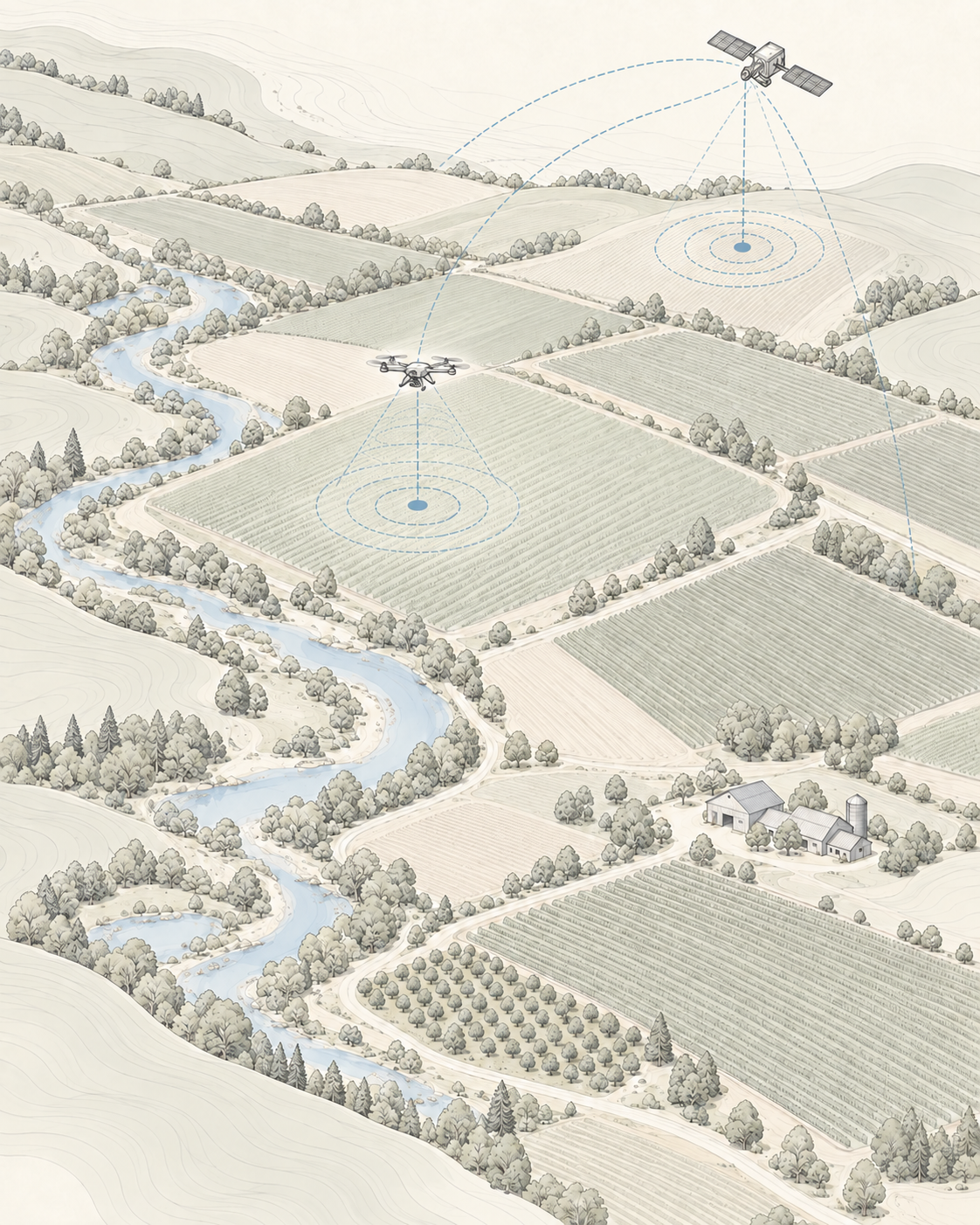
Nexa Vision provides visual perception for inspection and identification, Synapse Control coordinates missions, equipment and telemetry, and Axis executes actions in the physical world.
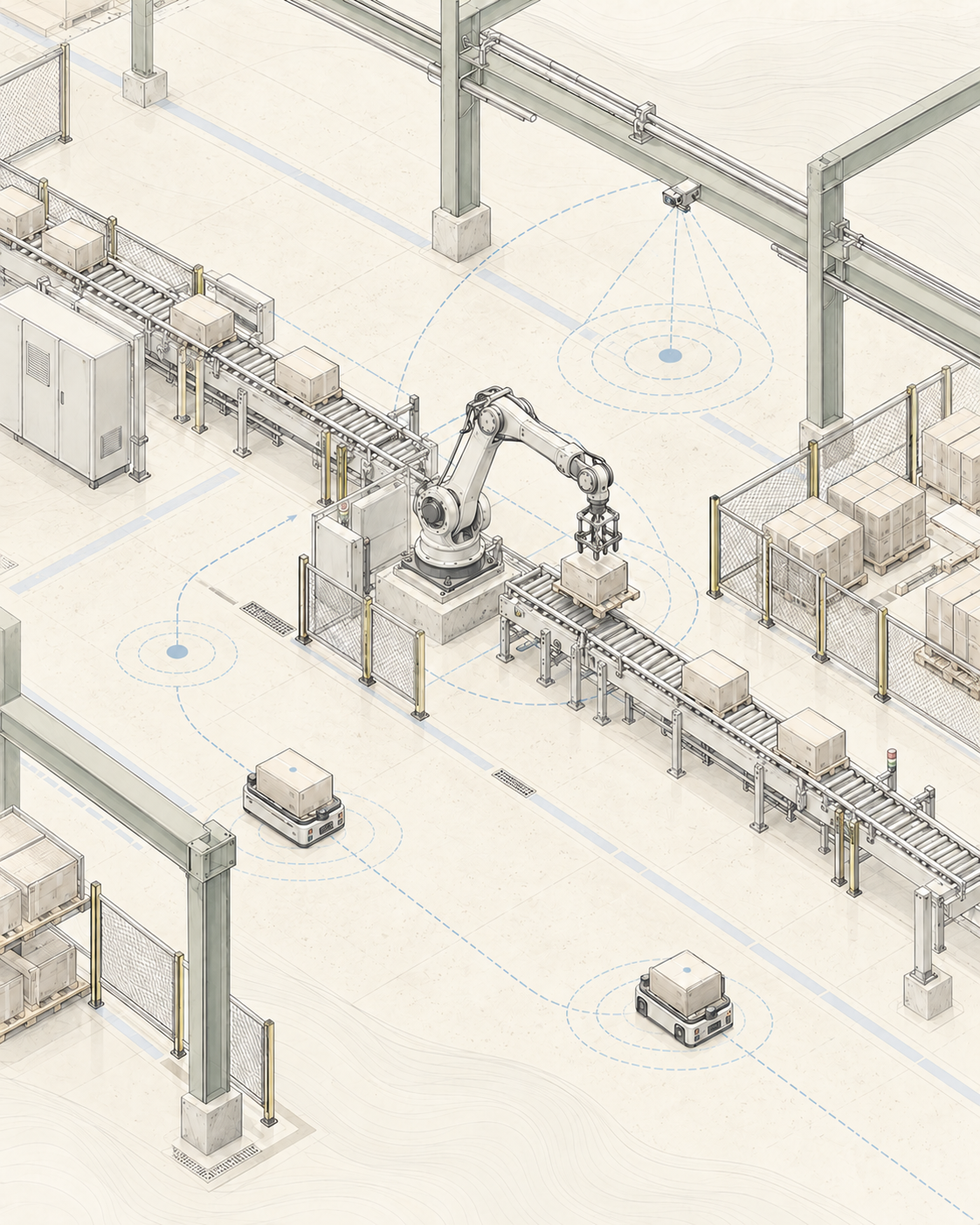
Nexa Vision inspects stockpiles, structures and operational areas, Nexa M1 interprets spatial change, Atmos adds environmental context and Synapse Control coordinates remote missions.
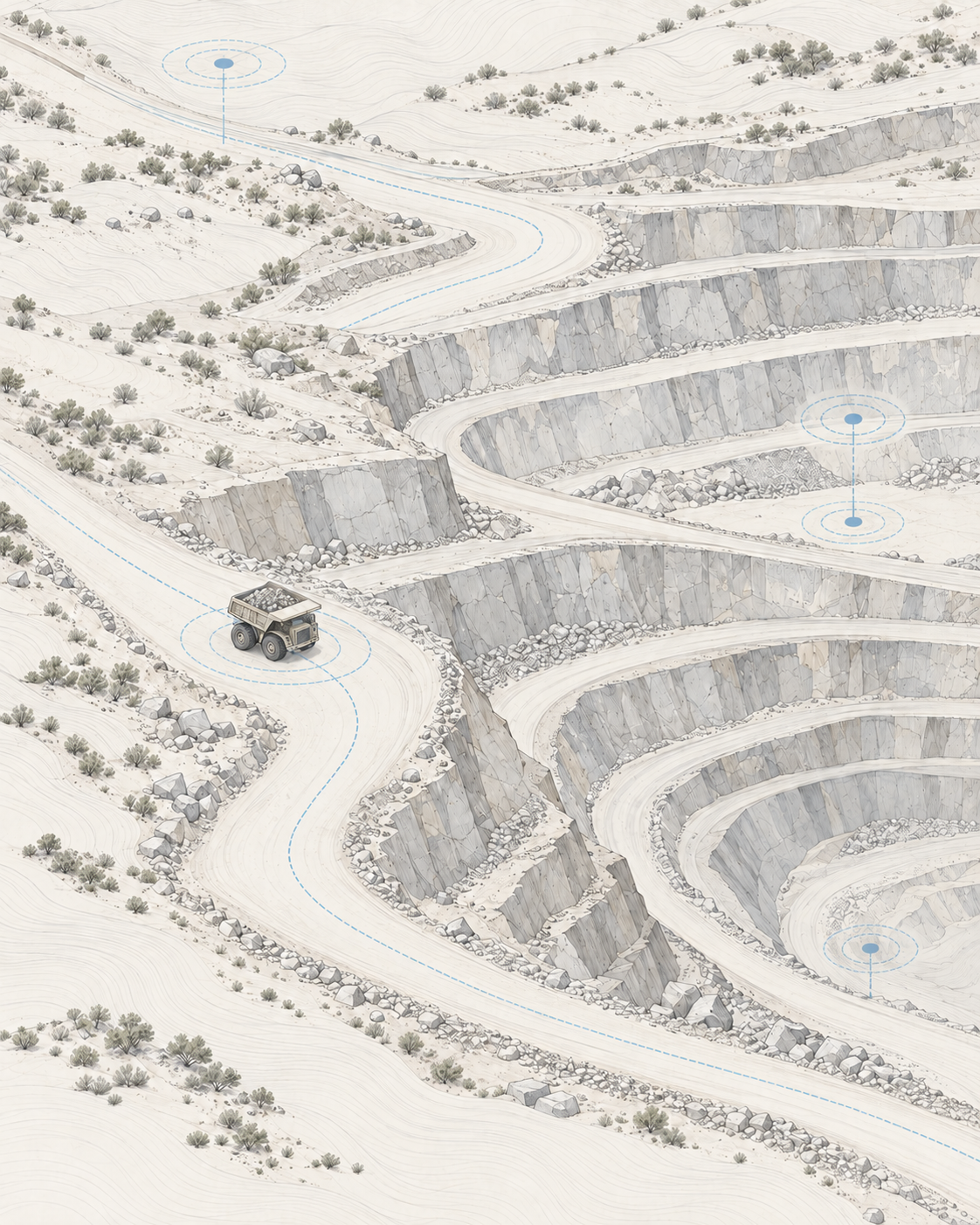
Nexa Vision provides visual perception and asset tracking, Synapse Control plans missions, routes and telemetry, and Axis connects digital decisions to physical execution.
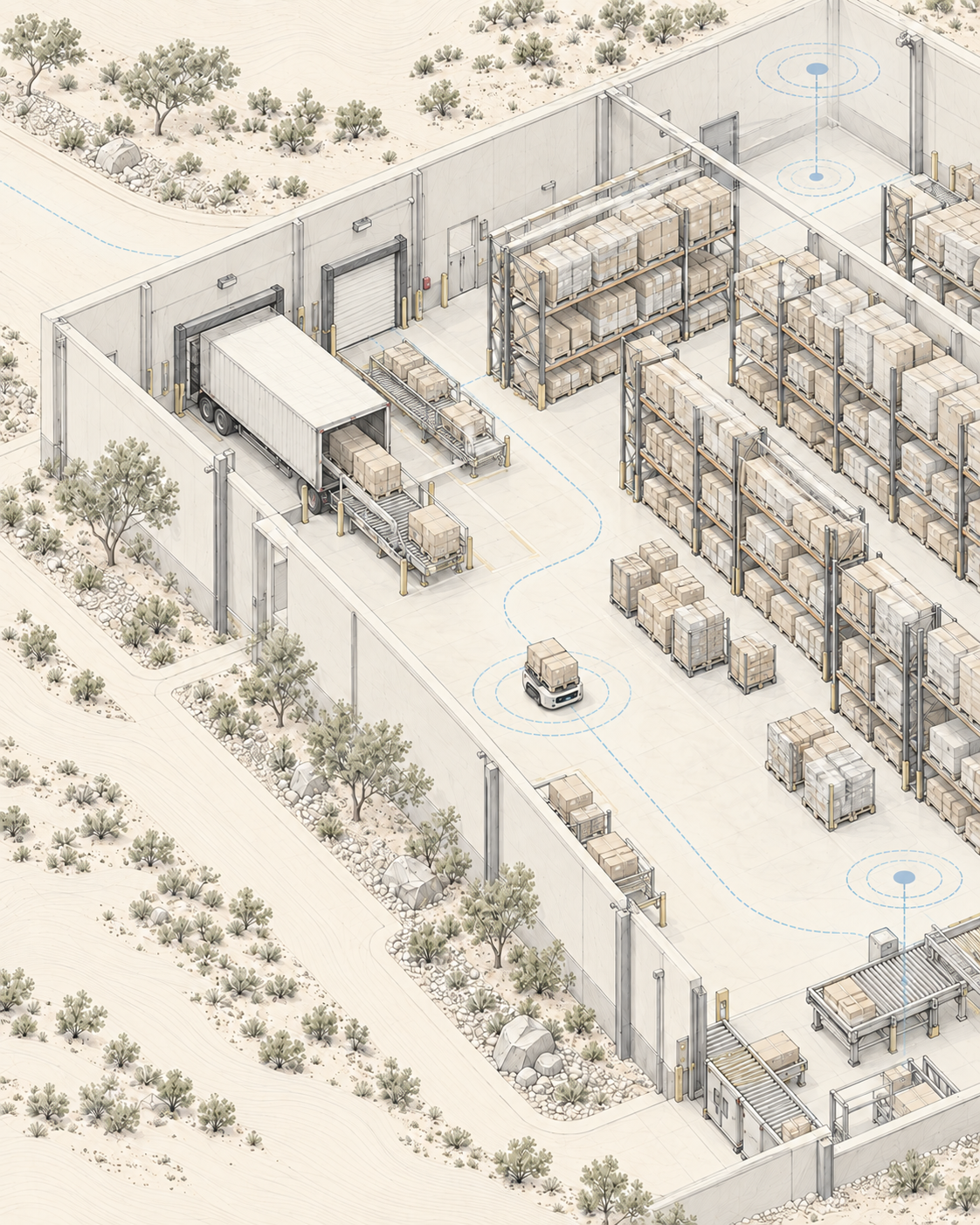
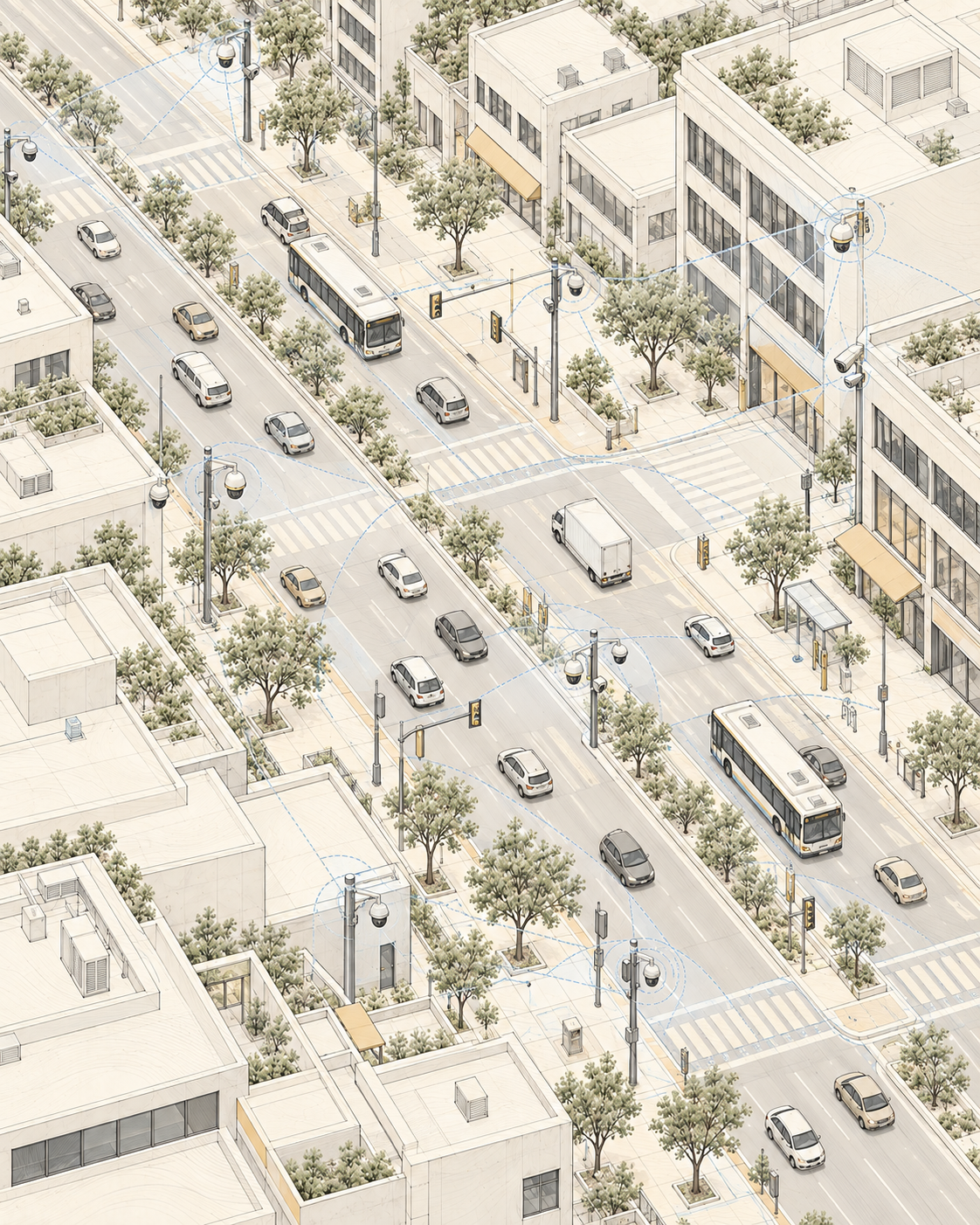
Nexa Vision monitors facilities and assets, Nexa M1 interprets environmental change, Atmos provides environmental context and Synapse Control coordinates remote missions and alerts.
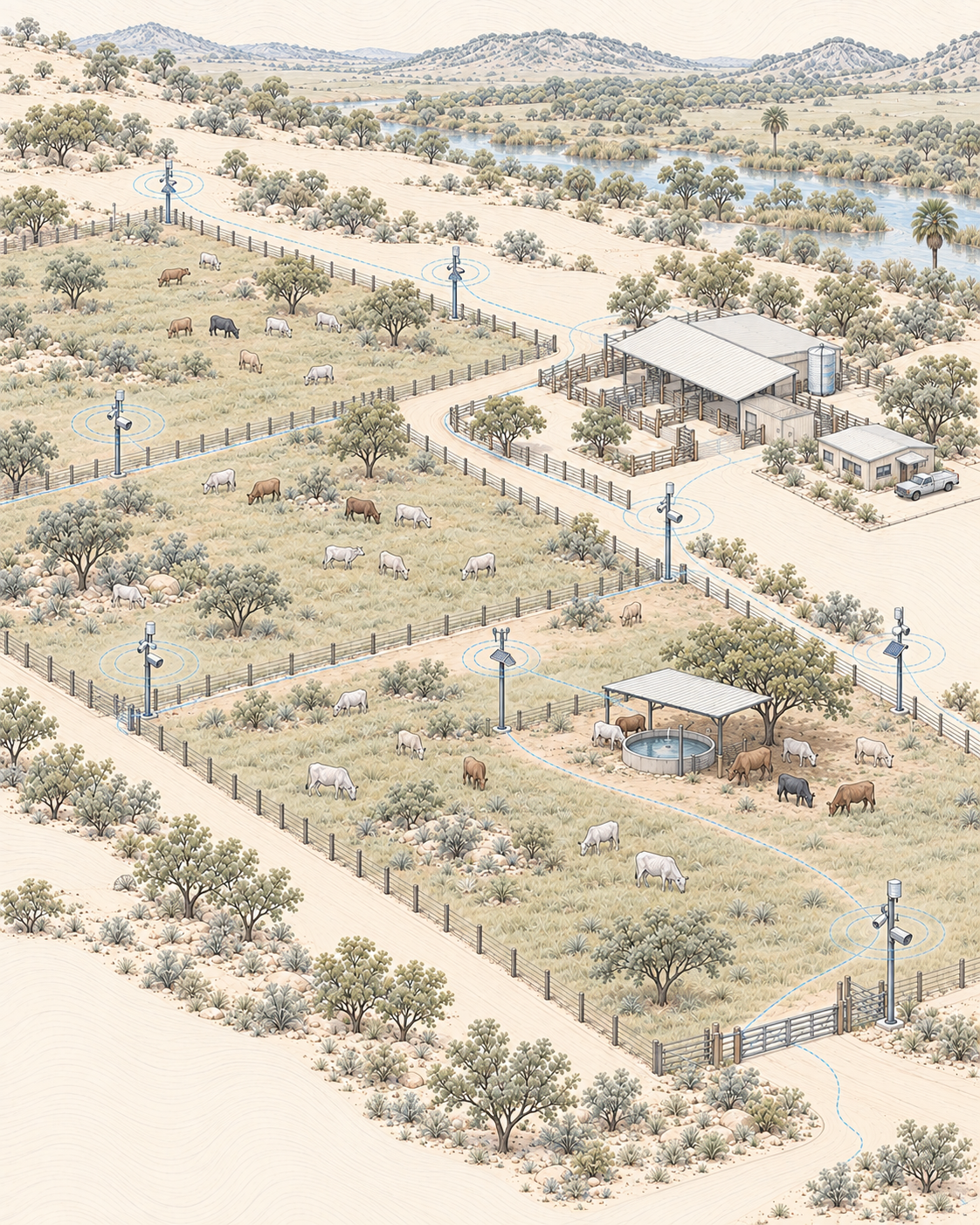
Nexa Vision tracks the condition of pasture areas, Nexa M1 interprets their temporal evolution and Atmos supplies local climate context.
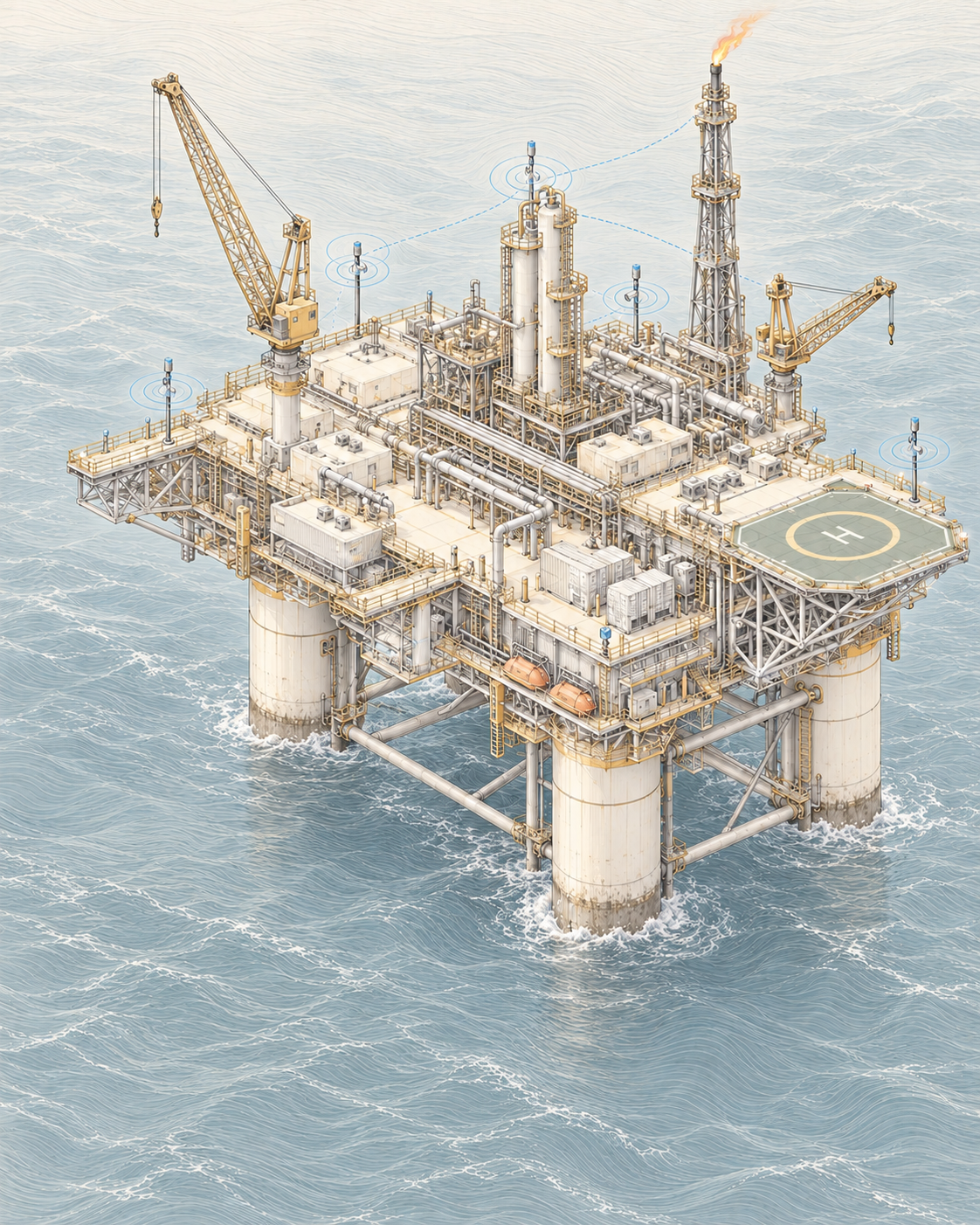
Nexa Vision captures operational areas and infrastructure, Nexa M1 interprets change between cycles, Atmos adds environmental context and Synapse Control coordinates remote inspection missions.
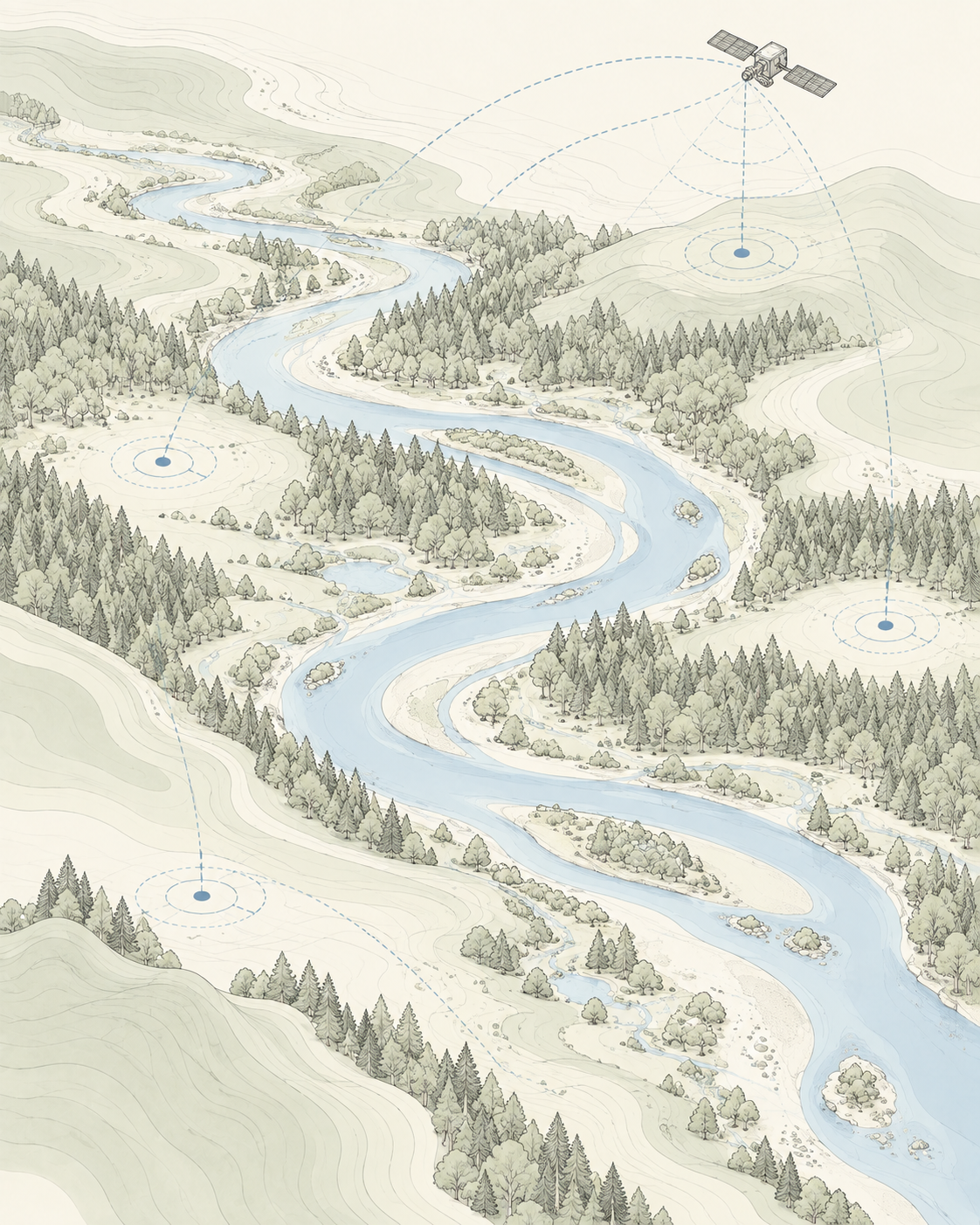
Nexa Vision observes areas of environmental interest, Nexa M1 interprets cover and territorial change, Atmos supplies climate context and Synapse Control coordinates monitoring cycles.
Products
Two products structure the reading of the physical world — and a family of systems connects data, control and execution.
Reads imagery and orbital data, extracts indices and identifies patterns and anomalies in the monitored area.
Explore perceptionInterprets signals with context, prioritizes what matters and delivers diagnosis and report.
Explore intelligencePerception + Intelligence
Nexa Vision and Nexa M1 operate independently and complement each other when connected: one extracts the reading, the other gives it context and direction.
Conceptual ecosystem integration · each product also runs on its own
Three applications to explore how data, intelligence and operations can work together. Requirements and integrations depend on each project.
Precision agriculture
Imagery and field information help observe crop variability and organize monitoring over time.
Industry
Observing environments and processes can support evaluation and coordination between people and systems.
Territorial monitoring
Imagery helps explore areas and compare records to focus on changes that deserve field analysis.
We develop our own architecture and configure it for each operation.
Every pilot ships with comparable ROI, OEE and telemetry.
A proprietary technology stack designed for continuous operation, technical support and long-term evolution.
Automation frees up time, it doesn't replace people — we design with that commitment.
We assess the operation, the monitored area and the problem to solve, then define the right architecture.
Nexa M1, Nexa Vision, Atmos, Synapse Control and Axis are combined based on the data, sensors and automation level the operation requires.
We set up monitoring, analysis, sensing, mission control and automation in a single operational architecture.
The platform continuously tracks the environment, turns data into decisions and connects digital intelligence to execution in the physical world.
We build an integrated architecture of artificial intelligence, computer vision, sensing and robotics to turn real-world data into diagnosis, decisions and execution.
Scope, constraints and success criteria defined together with the client.
The Convex architecture is defined for the operation, with scope, timeline and risks mapped out.
Assisted installation, live telemetry and team training.
Ongoing operation contract, support and iterative evolution.
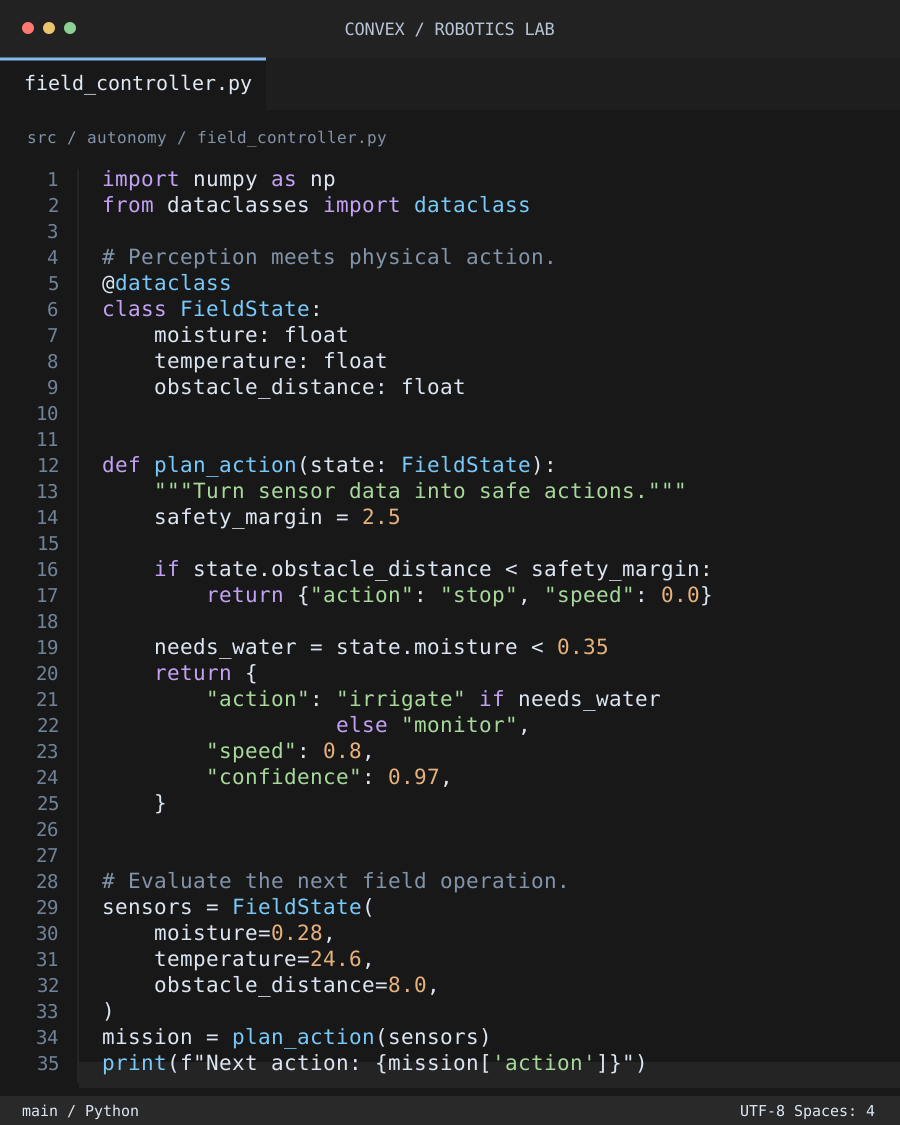
What human work does it free up? The answer defines material, sensor, motion, cost. The platform handles the rest.
Physical world
Software, perception and control only come full circle when they become measurement and action on a real environment. That is why the architecture does not end on screen.
Automation to extend, not replace. Our architecture takes on the repetitive and the risky so people and operations can focus on what really matters.
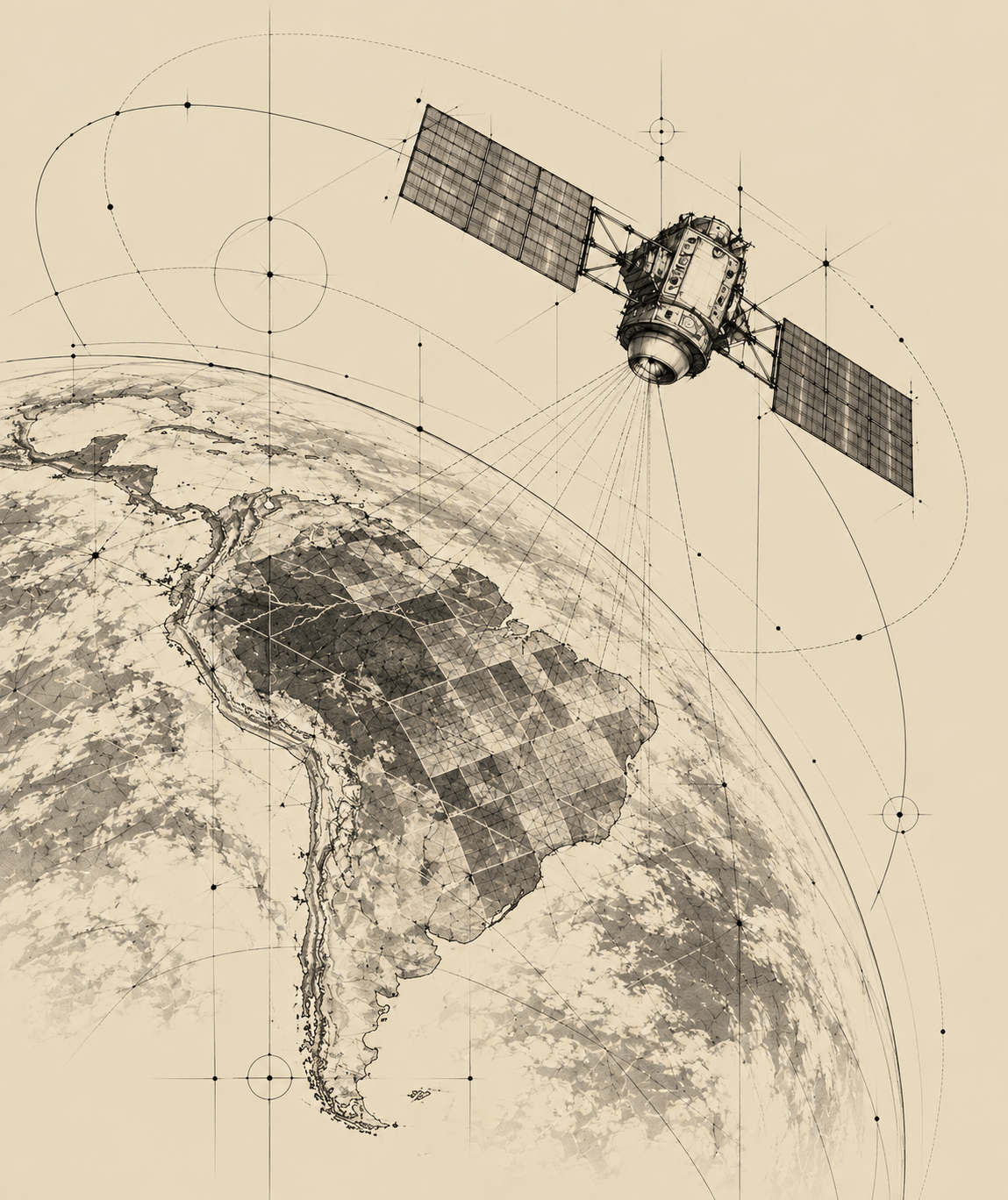
Research and development
Perception, control, hardware and robotics advance in the same process of investigation — what we learn in the field returns to the next generation of the system.
Explore the platform products or talk to the team about your project's context, needs and possibilities.